
Uneven skin tone, dark spots, and hyperpigmentation are common skin concerns for many. In skin science, the key to addressing these issues lies in understanding what melanogenesis is. Grasping this biological mechanism helps you make informed skincare decisions and select a safe, targeted whitening serum that acts directly on the root causes of skin discoloration.
1. What Is Melanogenesis? Understanding Pigmentation to Select the Right Whitening Serum
Melanogenesis is the biological process of melanin synthesis taking place within specialized skin cells called melanocytes. This complex biochemical pathway produces melanin, the natural pigment responsible for the color of our skin, hair, and eyes.
The Natural Role of Melanin in the Skin
Biologically, melanin is not harmful; it acts as a natural defense mechanism protecting cellular DNA from ultraviolet (UV) radiation and free radical damage. However, when melanogenesis is overstimulated, excess melanin accumulates on the epidermis, manifesting as dark spots, melasma, and uneven tone. Introducing an effective skin brightening serum at the right time helps keep this pigment production balanced.
Two Main Types of Melanin and How a Whitening Serum Works
During melanogenesis, melanocytes synthesize two distinct types of melanin:
- Eumelanin (Brown to Black pigment): Highly effective at absorbing and scattering UV radiation, offering superior photoprotection.
- Pheomelanin (Yellow to Red pigment): Offers less UV protection and can generate free radicals when exposed to oxidative stress.
Your skin tone depends on the ratio of Eumelanin to Pheomelanin. The objective of a scientifically formulated whitening serum is not to eliminate melanin entirely, but to regulate melanogenesis for a balanced, radiant complexion.
2. Deciphering the 4 Stages of Skin Pigmentation to Choose an Effective Whitening Serum
Skin pigmentation occurs through a continuous biological cascade from the basal layer of the epidermis up to the skin’s surface. Understanding these four steps highlights why choosing a multi-action pigmentation correction serum is essential.
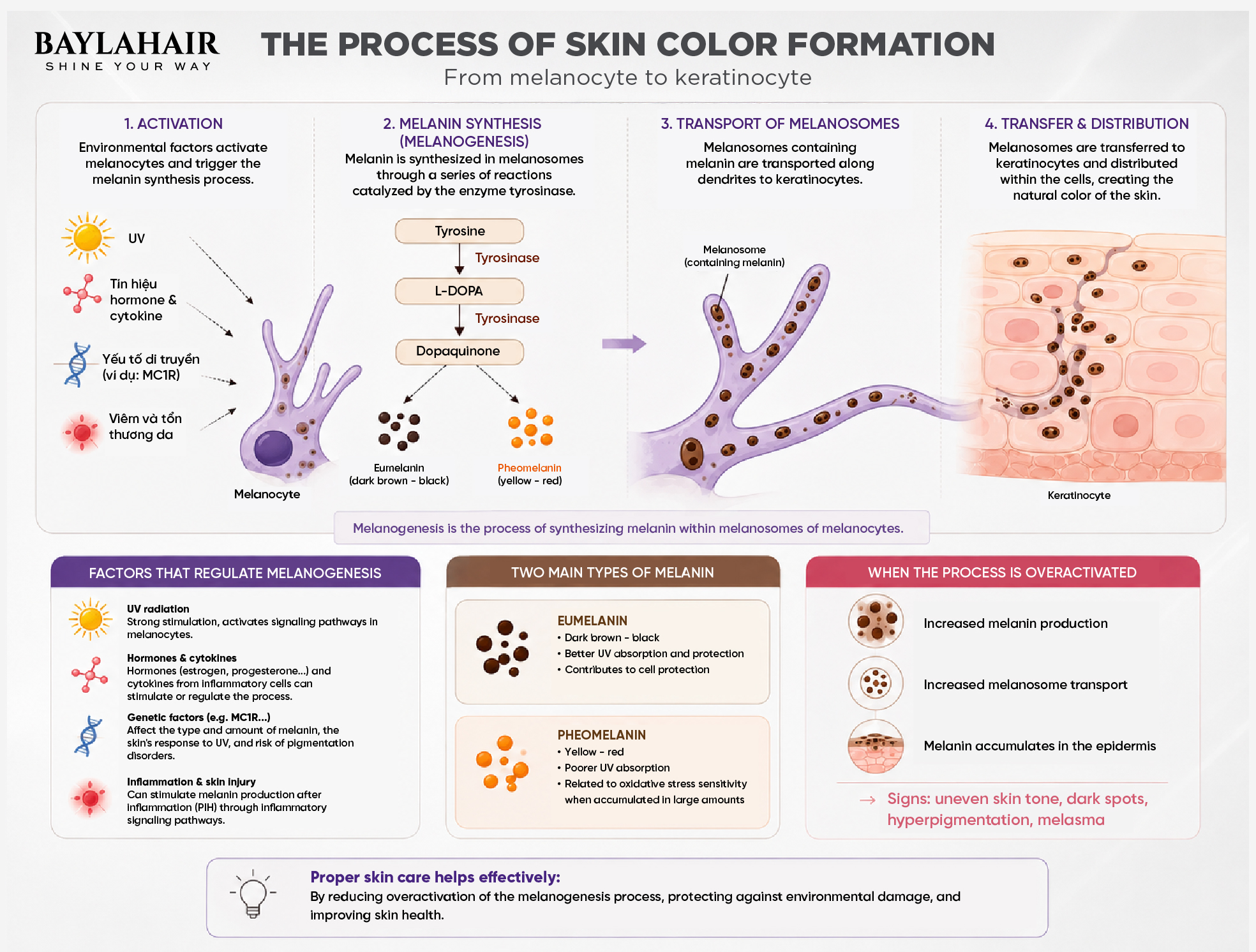
Step 1: Activation Signals of Melanogenesis
Exposure to UV radiation, hormonal fluctuations (estrogen, progesterone), or skin inflammation triggers intracellular signals. Alpha-Melanocyte-Stimulating Hormone (α-MSH) is released and binds to receptors on melanocytes, initiating the pigmentation cycle.
Step 2: Melanin Synthesis Within the Cell
Upon activation, melanocytes produce Tyrosinase—the critical enzyme in melanogenesis. Tyrosinase catalyzes the oxidation of the amino acid Tyrosine into L-DOPA and Dopaquinone, forming melanin inside specialized vesicles called melanosomes. At this stage, using a dedicated melanin inhibiting serum helps block this enzyme’s activity.
Step 3: Melanosome Transport
Once melanosomes mature and fill with melanin granules, they travel along the dendrites (branch-like extensions) of the melanocyte toward neighboring skin cells.
Step 4: Transfer and Distribution
Melanocytes transfer mature melanosomes into keratinocytes (surface skin cells). As part of the natural 28-day skin cell turnover cycle, these melanin-laden keratinocytes ascend to the outermost layer of the skin, resulting in visible dark spots and discoloration.
3. Key Triggers of Overactive Melanogenesis Requiring a Whitening Serum
Identifying what causes melanin overproduction helps you adjust your daily habits and select the most suitable dark spot serum:
- UV Radiation: The primary trigger (responsible for up to 80% of premature skin discoloration). UV rays induce oxidative stress and inflammatory signals, driving melanocytes into overdrive.
- Hormonal Fluctuations: Pregnancy, oral contraceptives, or hormonal changes can elevate MSH levels, leading to stubborn hyperpigmentation like melasma.
- Post-Inflammatory Hyperpigmentation (PIH): Dark spots left behind after acne, micro-injuries, or harsh chemical peels.
4. How Peptide Plus Serum Delivers Results as an Advanced Whitening Serum
By targeting the four-step melanogenesis pathway, a high-performance liposome peptide serum works deep within the skin rather than relying on surface exfoliation.
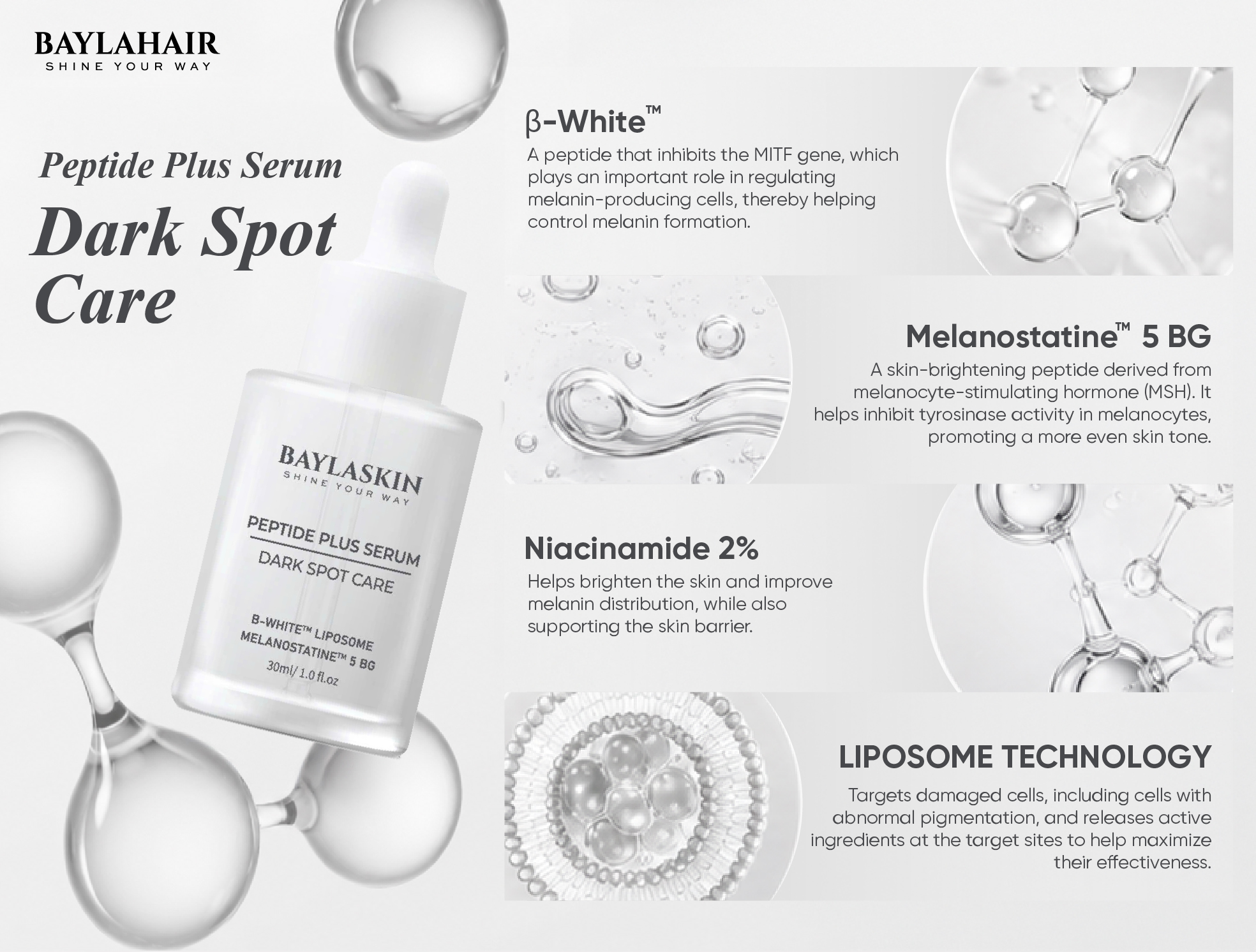
Peptide Plus Serum serves as an advanced whitening serum solution by combining targeted peptides with Liposome delivery technology:
- Melanostatine™ 5 BG (Targets Steps 1 & 2): A specialized peptide that prevents $\alpha$-MSH from binding to melanocyte receptors, effectively halting the initial activation signal of melanogenesis.
- β-White™ (Targets Step 2): Inhibits the MITF gene—the central controller of Tyrosinase production—controlling melanin formation right at the cellular level.
- Niacinamide 2% (Targets Step 4): Blocks the transfer of melanosomes to keratinocytes while strengthening the skin barrier and soothing inflammation.
- Liposome Encapsulation Technology: Encapsulates active brightening ingredients in microscopic phospholipid spheres. This allows the whitening serum to penetrate deep into the basal epidermal layer, releasing actives precisely where melanocytes reside without causing surface irritation.
5. Optimal Skincare Routine for Maximum Whitening Serum Results
To maximize the efficacy of your whitening serum in managing melanogenesis, follow this science-backed daily routine:
- Thorough Cleansing: Use a gentle cleanser with a balanced pH (around 5.5) to clear impurities without stripping the skin.
- Hydrate & Tone: Apply a hydrating toner to prep the skin, enhancing the absorption of subsequent actives.
- Apply Peptide Plus Serum: Dispense 3–4 drops of Peptide Plus Serum Baylaskin onto your fingertips and gently press onto your face and neck. Use twice daily (morning and evening).
- Moisturize: Apply a lightweight moisturizer to lock in active ingredients and prevent transepidermal water loss.
- Sun Protection (Daytime): Always finish with a broad-spectrum sunscreen (SPF 30+ or higher). Without proper UV protection, melanogenesis will continue to be triggered, neutralizing the benefits of your brightening routine.
Conclusion: Mastering Melanogenesis with the Right Whitening Serum
Melanogenesis is a natural biological function, but hyperpigmentation can be effectively managed with the right approach. Incorporating a scientifically formulated whitening serum like Peptide Plus Serum Baylaskin helps intercept dark spot formation at its source, promoting a clearer, brighter, and healthier complexion.