Aging is an inevitable, natural biological process. However, the cosmetic industry’s approach to addressing it has evolved significantly in recent years. Previously, anti-aging products focused primarily on accelerating surface-level skin turnover or plumping visible signs of aging. Today, dermatological research has shifted toward active ingredients capable of modulating the skin’s underlying biological mechanisms. Among these advancements, Peptides stand out as one of the most remarkable breakthroughs.
Rather than acting merely as topical moisturizers, Peptides function as cellular messengers. They trigger inherent physiological processes, such as collagen synthesis, tissue regeneration, and skin barrier repair. Consequently, Peptides have become a cornerstone in premium anti-aging formulations and a staple ingredient for leading skincare brands globally.
What Are Peptides?
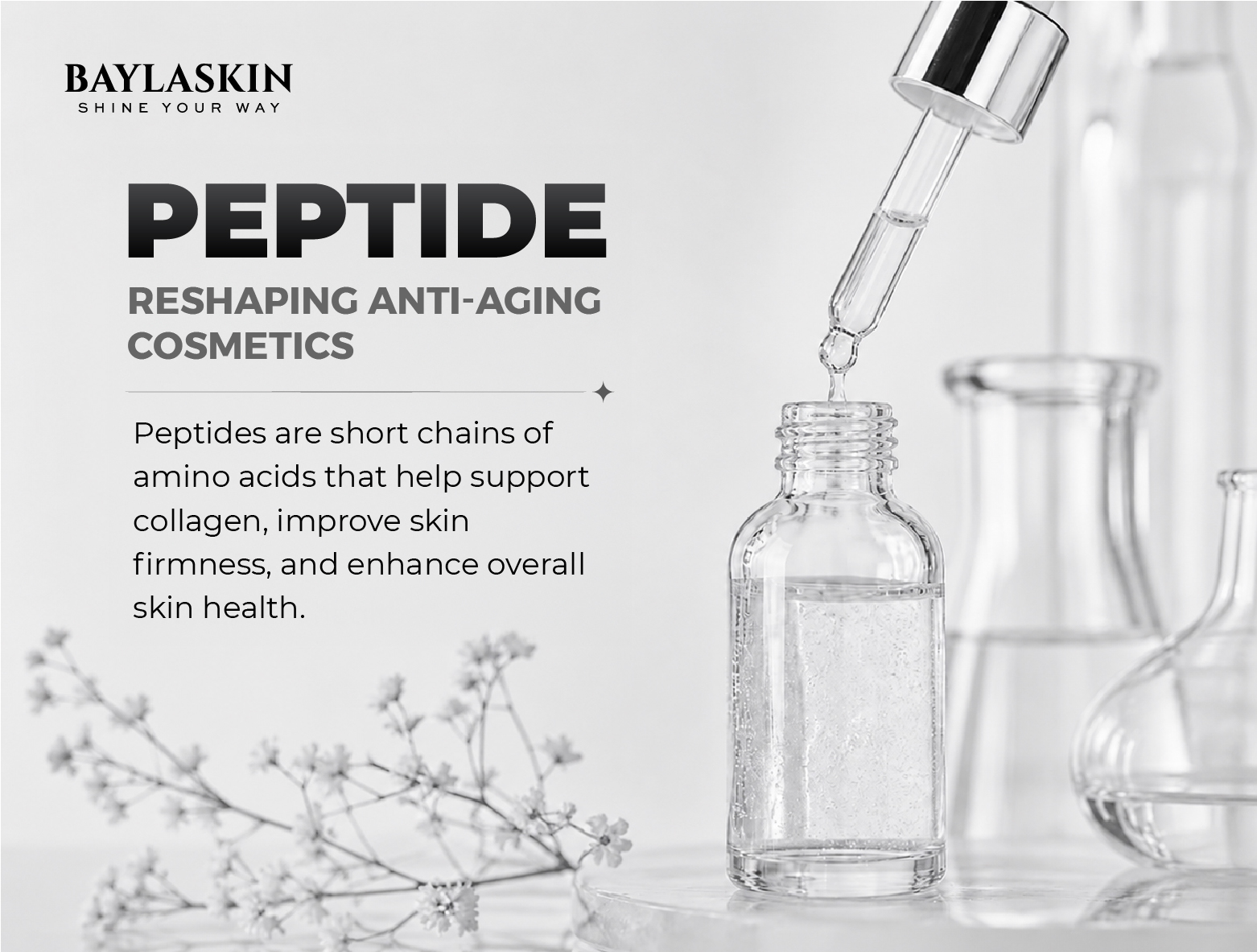
Peptides are short chains of amino acids, which serve as the fundamental building blocks of essential structural proteins such as collagen, elastin, and keratin. In human physiology, these proteins are responsible for maintaining the skin’s structural integrity, elasticity, and overall health.
The defining characteristic of Peptides is their capability to act as biological signals. When the skin undergoes aging or environmental stress, specific peptides transmit “messages” to cells to initiate repair and regenerative pathways. Instead of merely masking external imperfections, Peptides facilitate rejuvenation from within the dermal matrix, delivering more sustainable long-term results.
This robust scientific foundation explains why Peptides remain a premier anti-aging active ingredient, with new generations continuously being researched and developed.
Why Have Peptides Become a Leading Trend in Anti-Aging Cosmeceuticals?
As dermatology advances, the paradigm of anti-aging shifts. Rather than attempting to aggressively “reverse” chronological signs of aging through harsh surface disruptions, researchers now aim to optimize the skin’s natural biological functions.
Peptides align perfectly with this philosophy. Due to their low molecular weight and cell-signaling capabilities, Peptides stimulate endogenous regenerative processes without compromising the integrity of the skin barrier. This minimizes the risk of irritation, making them highly compatible with various skin types, including sensitive or compromised skin undergoing recovery.
Thanks to their excellent safety profile and compatibility with other active ingredients, Peptides have become ubiquitous in advanced serums, moisturizers, and targeted skincare treatments.
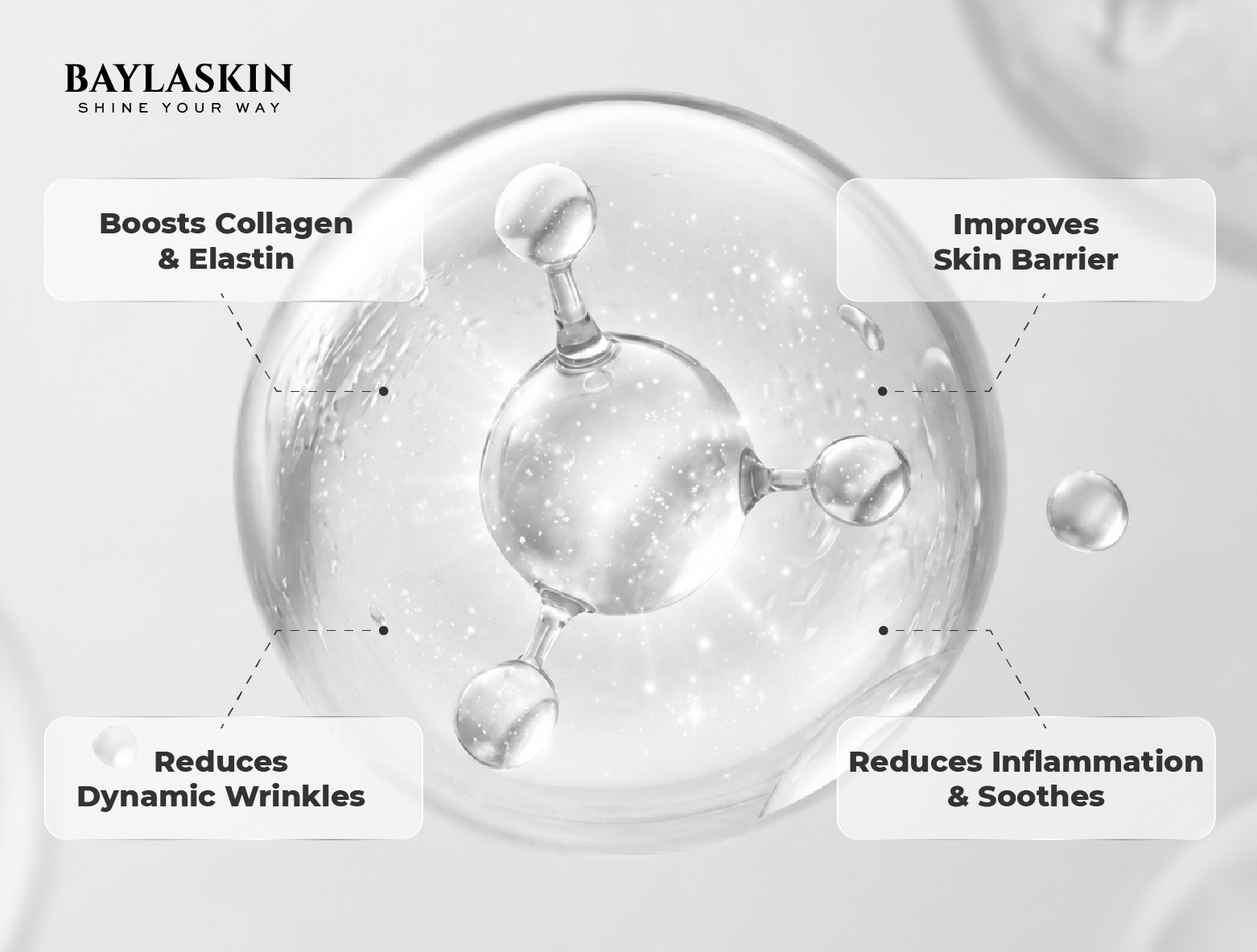
Key Dermatological Benefits of Peptides
1. Stimulation of Collagen and Elastin Synthesis
Collagen and elastin are the primary structural proteins that dictate skin firmness and elasticity. However, starting around age 25, natural collagen synthesis begins to decelerate, while existing fibers degrade due to UV radiation, pollution, and intrinsic aging. This leads to the formation of fine lines, wrinkles, and a loss of dermal density.
- Mechanism: Certain Signal Peptides stimulate fibroblasts to upregulate the production of new collagen and elastin.
- Result: By reinforcing the skin’s supportive matrix, the dermal architecture becomes firmer, visibly improving elasticity and reducing signs of chronological aging over time. Unlike superficial, temporary fixes, Peptides rebuild the skin infrastructure from within for sustainable vitality.
2. Attenuation of Dynamic Wrinkles
Not all wrinkles result from collagen depletion. Dynamic wrinkles—such as forehead lines, crow’s feet, and glabellar lines (frown lines)—are caused by repetitive micro-contractions of facial muscles during emotional expression.
- Mechanism: Specific Neurotransmitter Peptides modulate the neuromuscular signals responsible for muscle contractions.
- Result: By subtly relaxing these micro-movements, dynamic wrinkles are visibly softened over time while preserving natural facial expressions. This precise pathway is why neurotransmitter peptides are often referred to as topical “Botox-like” alternatives, offering non-invasive structural relaxation.
3. Skin Barrier Reinforcement
The stratum corneum acts as a protective shield, maintaining optimal hydration and defending against environmental aggressors. When this barrier is compromised, the skin experiences transepidermal water loss (TEWL), erythema, and heightened sensitivity.
- Mechanism: Peptides support epidermal regeneration and accelerate stratum corneum recovery, fortifying the skin’s natural defenses.
- Result: This enhances moisture retention, mitigates TEWL, and boosts resilience against pollution, UV radiation, and potent dermatological treatments. Consequently, Peptides are highly recommended for post-procedure recovery (e.g., chemical peels, laser resurfacing).
4. Anti-Inflammatory and Soothing Properties
Beyond their anti-aging efficacy, extensive research indicates that certain peptides modulate inflammatory responses. They suppress pro-inflammatory signals, accelerate tissue repair, and optimize the environment for cellular healing.
For skin sensitized by environmental stressors, UV exposure, or aggressive active ingredients, Peptides alleviate discomfort and restore compromised skin. This makes them not only a premier anti-aging solution but also an ideal choice for long-term skin health maintenance.
Major Classes of Peptides in Skincare
While collectively categorized as Peptides, different groups possess distinct mechanisms of action and targeted clinical benefits within modern formulations:
- Signal Peptides: This is the most prevalent class utilized in anti-aging topicals. They operate by mimicking the breakdown products of natural dermal proteins, thereby tricking the skin into synthesizing fresh collagen and elastin. Prominent examples include Palmitoyl Tripeptide-1 and Palmitoyl Tetrapeptide-7, which are routinely incorporated into advanced serums and creams to restore structural density and firmness.
- Carrier Peptides: These peptides function as specialized transport systems, delivering critical trace elements—most notably Copper—directly to the cellular matrix. These trace minerals are indispensable for enzymatic processes driving tissue repair and cellular remodeling. Consequently, ingredients like Copper Tripeptide-1 have become pivotal components in clinical post-procedure and wound-healing formulations.
- Neurotransmitter Peptides: This class directly targets dynamic expression lines by intercepting the biochemical signals sent from nerves to facial muscles. By subtly attenuating these micro-contractions, molecules such as Acetyl Hexapeptide-8 and Pentapeptide-18 work to visibly soften deep-set expression lines, providing a non-invasive option often compared to the effects of botulinum toxin.
- Enzyme Inhibitor Peptides: Unlike classes that stimulate production, these peptides play a defensive role by neutralizing the specific enzymes, such as matrix metalloproteinases (MMPs), responsible for degrading the skin’s existing structural proteins. Often derived from natural sources like soy or rice, they protect the integrity of the extracellular matrix, effectively preserving youthful skin elasticity and preventing premature sagging.
Who Should Incorporate Peptides into Their Routine?
Peptides are universally beneficial due to their non-irritating nature and exceptional compatibility with other skincare ingredients.
- Prevention (Ages 25+): Ideal for preserving natural collagen reserves and delaying the onset of intrinsic aging.
- Correction & Recovery: Excellent for mature skin exhibiting loss of elasticity, deep wrinkles, or skin undergoing intensive retinoid/acid treatments.
- Sensitive & Dry Skin: A perfect anti-aging alternative for individuals who cannot tolerate aggressive active ingredients (like high-strength retinoids), as well as those with a compromised skin barrier.
Synergistic Ingredient Pairings
One of the greatest formulation advantages of Peptides is their versatility. They integrate seamlessly into multi-ingredient regimens:
- Peptides + Hyaluronic Acid: Maximizes cellular hydration and plumps the extracellular matrix.
- Peptides + Niacinamide: Enhances skin radiance, evens skin tone, and strengthens the epidermal barrier.
- Peptides + Ceramides: Provides intensive lipid replenishment, making it ideal for dry or post-procedure skin recovery.
- Peptides + Antioxidants: Forms a comprehensive defense system that simultaneously neutralizes free radical damage and drives internal cellular repair.
Conclusion
Peptides have rightfully earned their status as a gold-standard active ingredient in modern anti-aging cosmeceuticals. Rather than offering superficial, transient improvements, Peptides modulate the skin’s natural biological pathways—from upregulation of collagen and elastin synthesis to the relaxation of dynamic wrinkles, barrier fortification, and inflammation control.
By delivering sustainable efficacy, an exceptional safety profile, and seamless formulation compatibility, Peptides represent a new paradigm in advanced skincare: achieving skin that is not only visibly younger but intrinsically healthier.
At Baylaskin, we prioritize scientifically validated, rigorously researched active ingredients. Our integration of advanced, next-generation Peptides into our formulations is designed not only to target visible signs of aging but to build a resilient, healthy dermal foundation tailored to the demands of modern skincare.