What is LIPOSOME TECHNOLOGY?
In recent years, advancements in the cosmetic industry have shifted focus from merely discovering novel active ingredients to enhancing their absorption efficiency and maximizing proven efficacy. This paradigm shift explains why LIPOSOME TECHNOLOGY has emerged as one of the most widely adopted formulation strategies in modern skincare.
In cosmeceuticals, a potent active ingredient does not guarantee optimal efficacy if it cannot be delivered to its specific target site within the skin. The natural skin barrier functions as a biological shield, effectively blocking environmental aggressors while simultaneously restricting the penetration of many topically applied skincare actives.
To overcome this dermal delivery challenge, scientists have engineered various novel delivery systems. Among these, liposome technology is recognized as one of the most advanced modalities due to its exceptional capacity to encapsulate, protect, and optimize active ingredient transport.
Today, liposomal delivery systems are extensively utilized in anti-aging, skin barrier repair, brightening, and intensive hydration formulations. Beyond amplifying ingredient efficacy, LIPOSOME TECHNOLOGY significantly enhances formulation stability and mitigates the risk of topical irritation.
Liposome Structure: The Foundation of Advanced Delivery Systems
To appreciate the clinical benefits of liposome technology in cosmetics, it is essential to understand the unique structural architecture of this vehicle.
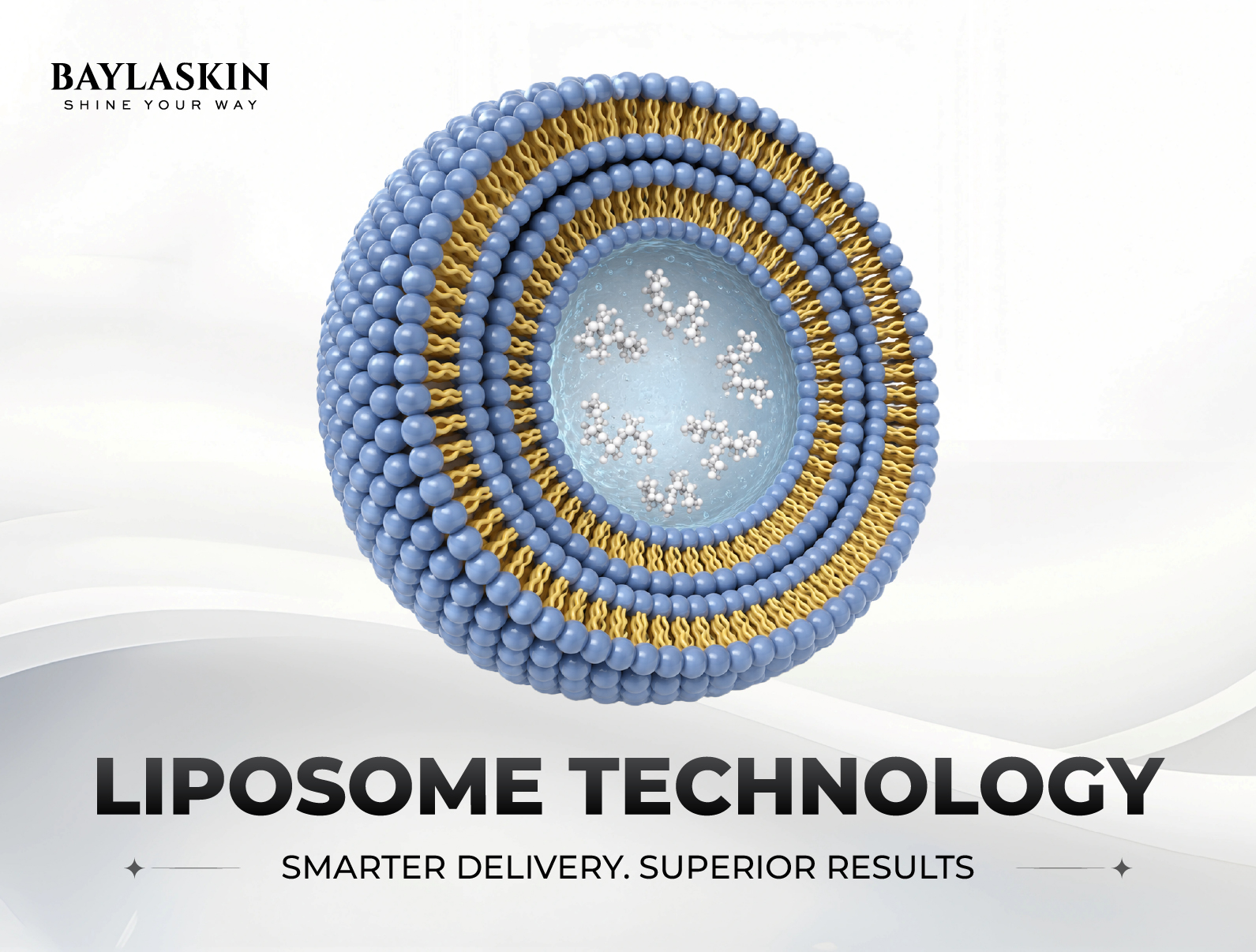
Liposomes are spherical vesicular carriers composed of phospholipids—amphiphilic biomolecules structurally analogous to human cellular membranes. This structural biomimicry endows liposomal cosmetics with high biocompatibility, allowing seamless interaction with the stratum corneum.
Each phospholipid molecule consists of:
- Hydrophilic Head: A polar moiety with a high affinity for aqueous environments, oriented outward toward the continuous phase or inward enclosing the aqueous core.
- Hydrophobic Tail: A non-polar domain comprising fatty acid chains that self-assemble inward to minimize contact with the surrounding aqueous medium.
When dispersed in water, phospholipids spontaneously organize into a phospholipid bilayer, creating an enclosed core capable of entrapping active compounds.
Advanced liposomal systems incorporate phosphatidylcholine—a naturally occurring phospholipid typically derived from botanical lecithin—to enhance structural stability and cutaneous affinity.
Leveraging this specialized architecture, LIPOSOME TECHNOLOGY functions as an advanced active delivery system while concurrently achieving active encapsulation to shield labile molecules from environmental degradation.
Why Can Liposomes Encapsulate Diverse Active Ingredients?
A primary advantage of liposome technology is its amphiphilic loading capacity, enabling the simultaneous entrapment of both hydrophilic (water-soluble) and lipophilic (oil-soluble) compounds.
- Hydrophilic Actives (Entrapped within the aqueous core):
- Peptides
- Niacinamide
- Vitamin B5 (Panthenol)
- Hyaluronic Acid
- Amino Acids
- Lipophilic Actives (Integrated into the lipid bilayer):
- Retinol
- Ceramides
- Vitamin E (Tocopherol)
- Coenzyme Q10
- Biomimetic Lipids
Consequently, this versatile delivery platform is highly adaptable across various product categories, from corrective anti-aging serums to barrier-restoration complexes.
Mechanism of Action of Liposomes in the Skin
The clinical value of LIPOSOME TECHNOLOGY extends beyond simple encapsulation; it lies in its ability to optimize the therapeutic index of actives within the skin.
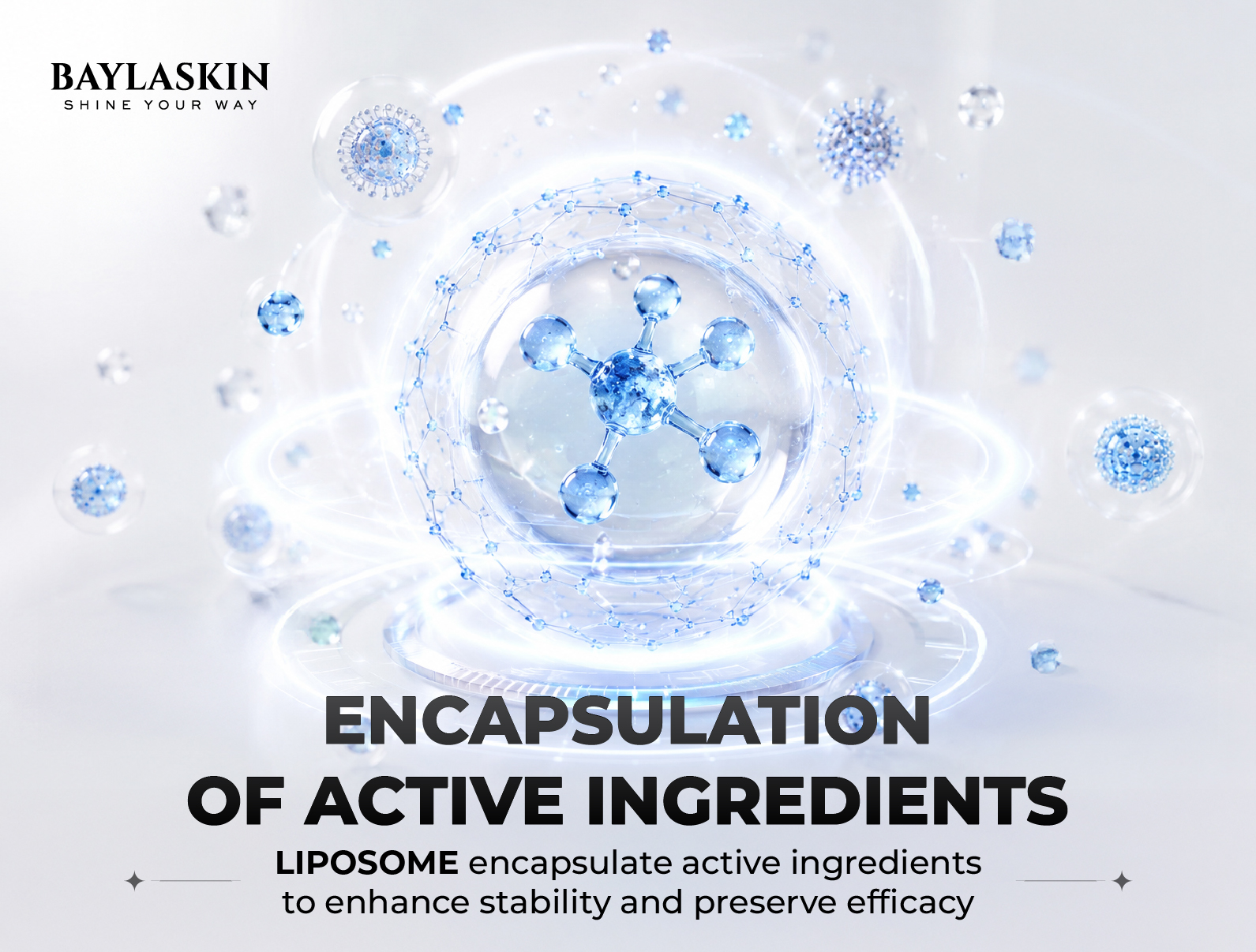
Active Encapsulation
Many high-performance cosmetic actives are highly susceptible to photodegradation, oxidation, or thermal instability.
- Retinol: Prone to rapid oxidation.
- Vitamin C (Ascorbic Acid): High degradation kinetics.
- Peptides: Susceptible to enzymatic cleavage and loss of bioactivity.
Through active encapsulation, the liposomal membrane acts as a protective shield, minimizing ingredient degradation during storage and application, thereby preserving potency until dermal contact.
Enhanced Transdermal Penetration
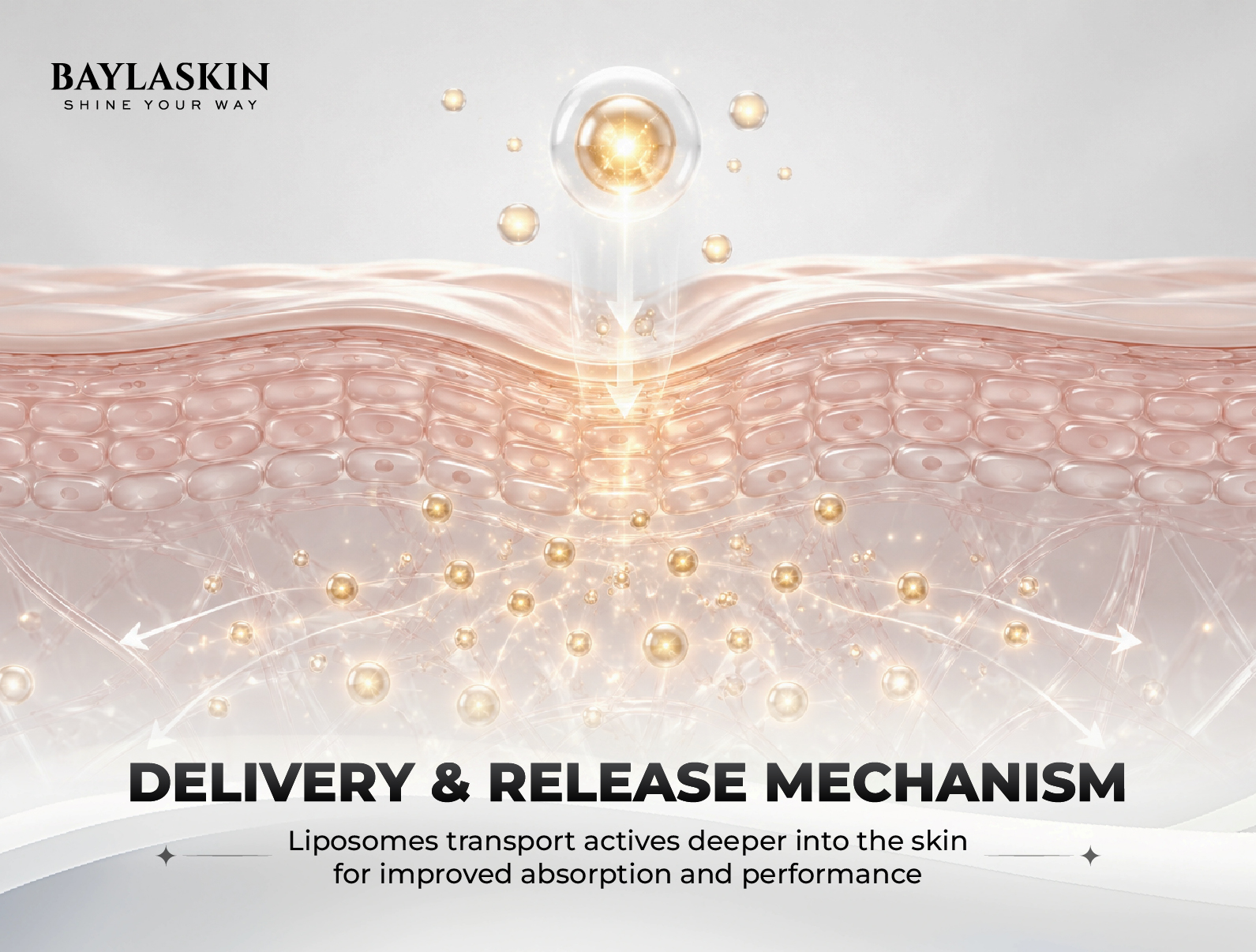
The stratum corneum, composed of corneocytes embedded in an intercellular lipid matrix, represents the primary rate-limiting barrier to topical drug delivery. Because liposomes are formulated with phospholipids mirroring endogenous skin lipids, they exhibit superior interfacial affinity with the skin barrier compared to conventional vehicles.
- Maximizes transdermal flux
- Facilitates targeted delivery to deeper epidermal layers
- Optimizes skincare efficacy
- Elevates bioavailability
This explains why liposomal encapsulation is standard practice for high-value premium actives.
Controlled Release
Unlike conventional topical emulsions, LIPOSOME TECHNOLOGY operates as a controlled-release system. Actives are liberated progressively over an extended period rather than flooding the skin surface immediately upon application.
- Sustains prolonged active bioavailability
- Maintains steady-state efficacy
- Prevents localized active overloading
- Minimizes skin irritation and adverse reactions
Maximizing Active Bioavailability
In cosmetic science, efficacy is governed not merely by concentration, but by the bioavailable fraction reaching the target site. An active with superior flux and absorption will yield higher clinical efficacy than a high-concentration formula that fails to penetrate. LIPOSOME TECHNOLOGY is therefore the definitive solution for optimizing the bioavailability of modern skincare actives.
Classification of Liposomes in Modern Cosmeceuticals
Evolution in vesicle engineering has yielded distinct liposomal structures tailored to specific dermatological endpoints:
- Small Unilamellar Vesicles (SUV): Single-bilayer, low-nanometer vesicles providing an increased surface-area-to-volume ratio, uniform distribution, and enhanced penetration.
- Large Unilamellar Vesicles (LUV): Single-bilayer, larger-diameter vesicles optimized for high payload capacity, particularly beneficial for hydrophilic macromolecules.
- Multilamellar Vesicles (MLV): Concentric multiple-bilayer structures (“onion-like”) providing superior physical stability, robust active protection, and sustained prolonged-release profiles.
- Nano-Liposomes: The premier generation of ultra-small vesicles frequently deployed in advanced serums to optimize skin-surface wetting, refine distribution uniformity, and maximize delivery kinetics.
Driving the Liposome Trend in Modern Cosmetics
Modern consumer behavior has shifted away from product overloading and aggressive high-percentage formulations toward a philosophy of minimalist, high-efficacy skincare.
Today’s consumers demand:
- Clinically proven, visible efficacy
- Minimized risk of dermatitis/irritation
- Support for skin barrier homeostasis
- Optimized active performance
Instead of engaging in an “percentage escalation race,” cutting-edge brands are focusing on optimizing delivery systems to improve actual bio-utility.
Key Applications of Liposomal Systems
- Liposomal Peptides: Protects fragile peptide chains from enzymatic degradation, ensuring structural integrity and maximizing anti-aging signaling.
- Liposomal Retinol: Shields retinoids from oxidation, stabilizes bioactivity, and provides slow-release kinetics to mitigate retinoid-induced irritation.
- Liposomal Vitamin C: Stabilizes volatile L-ascorbic acid against oxidative browning, enhancing its brightening and antioxidant performance.
- Liposomal Ceramides: Enhances integration into the endogenous intercellular lipid matrix to accelerate barrier repair.
- Liposomal Niacinamide: Boosts delivery efficiency to optimize melanogenesis regulation and skin tone equalization.
The Synergy Between Liposomes and Peptides
Among modern cosmeceutical ingredients, peptides benefit exponentially from liposomal encapsulation. While peptides are clinically proven to improve elasticity, attenuate signs of chronological aging, and drive dermal repair, their molecular weight and hydrophilic nature often restrict passive diffusion.
Encapsulation within a liposomal matrix ensures:
- Enhanced chemical and structural stability
- Preservation of intrinsic bioactivity
- Elevated potency of anti-aging peptide serums
- Homogeneous topical distribution
Consequently, the conjugation of peptides with liposomal technology represents the benchmark for next-generation anti-aging serum architectures.
Experience Advanced Delivery Science with BAYLASKIN Peptide Plus Serum
When evaluating a peptide serum, the critical determinant is not merely the total peptide concentration, but the vehicle’s capacity to deliver those peptides to their physiological sites of action.
BAYLASKIN Peptide Plus Serum is engineered at the intersection of advanced barrier-repair actives, anti-aging biomolecules, and sophisticated delivery mechanics.
The formulation targets:
- Improving structural skin elasticity
- Mitigating premature signs of aging
- Reinforcing skin barrier integrity
- Providing intensive micro-hydration and calming benefits
- Amplifying the bio-utility of a multi-tier peptide complex
By harmonizing active ingredient science with advanced delivery systems, every drop of serum is optimized for maximal cutaneous bio-availability, delivering a scientifically superior skincare experience.
Conclusion
LIPOSOME TECHNOLOGY represents far more than a simple encapsulation method; it is a cornerstone of modern advanced delivery systems. Armed with a biomimetic phospholipid bilayer, active encapsulation capabilities, controlled-release kinetics, and superior penetration enhancement, liposomes form the infrastructure for next-generation cosmeceuticals.
As consumers increasingly demand demonstrable clinical efficacy over superficial ingredient lists, liposomal technology stands out as the definitive solution to maximize bioavailability, elevate active ingredient performance, and pioneer a safer, scientifically grounded approach to skincare.