
Many people experience a skin condition where the skin surface is constantly shiny and greasy with excessive oil production, yet applying facial mists or moisturizers still results in tight, stinging, or mild flaking around the nose and mouth. This is a classic sign of oily dehydrated skin.
Many often confuse dry skin with dehydrated skin, leading to the use of incorrect products and over-cleansing to remove every trace of oil, which further damages the skin barrier. In this article, our team of dermatology experts will help you understand the true nature of this condition, identify it accurately, and establish a scientific oily dehydrated skin care routine to restore a plump, radiant complexion.
1. What is Oily Dehydrated Skin? Distinguishing Between Oily Dehydrated Skin and Dry Skin
Before diving into the steps of oily skin care, it is essential to clearly distinguish between Skin Type and Skin Condition.
- Skin Type: Determined by genetics, based on the number and size of sebaceous glands. Oily Skin is a skin type that naturally produces more sebum than normal.
- Skin Condition: A temporary state caused by environmental factors, lifestyle, or skincare products. Any skin type – including oily skin – can become dehydrated.
The Essence of Oily Dehydrated Skin: It refers to skin with hyperactive sebaceous glands (excess oil) combined with a severe lack of water in the epidermal cells (dehydration). When moisture levels drop below what is required, the skin automatically triggers a response signal instructing the sebaceous glands to double their oil production as compensation, creating a vicious cycle: The more dehydrated the skin, the more oil it produces.
Quick Comparison Between Dry Skin and Oily Dehydrated Skin
Oily dehydrated skin is easily mistaken for dry skin because certain areas of the face feel drier than usual. To evaluate accurately, consider the following points:
By Nature:
- Dry Skin: Lacks oil due to very low natural sebum production.
- Oily Dehydrated Skin: Lacks water and moisture at the epidermal layer, despite high oil production.
By Pores:
- Dry Skin: Pores are very small, fine, and hard to see with the naked eye.
- Oily Dehydrated Skin: Large, visible pores, particularly in the T-zone or across the entire face.
By Oil Production:
- Dry Skin: Rarely produces oil, or produces a minimal amount in summer.
- Oily Dehydrated Skin: Heavy, continuous oil production, especially in the T-zone or whole face.
By Skin Surface Sensation:
- Dry Skin: Rough and dry year-round, frequently accompanied by a mild stinging sensation.
- Oily Dehydrated Skin: Surface remains shiny with oil, but the underlying skin feels tight, burning, and lacking elasticity.
By Accompanying Issues:
- Dry Skin: Prone to sensitivity, large flaky patches, and premature signs of aging.
- Oily Dehydrated Skin: Prone to clogged pores, leading to closed comedones, blackheads, and a dull skin tone.
2. Most Accurate Signs of Oily Dehydrated Skin
If you are wondering whether your skin falls into the oily dehydrated category, check for the following signs:
- Shiny oil production paired with a tight, pulling sensation: About 15–30 minutes after cleansing, the face feels tight and stretched, yet within 1–2 hours, excess oil pours out heavily.
- Makeup gets cakey and oxidizes quickly: Foundation fails to adhere smoothly, becoming patchy around the forehead and nose folds, while sliding off rapidly on the cheeks due to excess sebum.
- Flaking around breakouts: Despite overall oiliness, areas around acne spots or the sides of the nostrils exhibit fine, dry flakes.
- Dull and fatigued appearance: Dehydrated skin loses resilience, looking tired and displaying fine lines when smiling.
3. Causes of Severe Water Loss in Oily Skin
Building an effective oily skin care regimen requires eliminating root causes. Key factors driving dehydration in oily skin include:
- Using High-pH Cleansers: Over-foaming or harsh cleansers containing strong sulfates (SLS/SLES) strip away natural skin lipids, destroying the protective barrier.
- Overusing Actives (BHA, AHA, Retinol, Tretinoin): Using chemical exfoliants or intensive treatments too frequently without adequate barrier recovery causes skin overload and rapid transepidermal water loss.
- Skipping Moisturizer: The misconception that “oily skin does not need moisture” leads to prolonged dehydration.
- Environment and Lifestyle: Prolonged exposure to air conditioning, low water intake, late nights, or chronic stress directly diminish skin hydration levels.
4. Medical-Grade Oily Dehydrated Skin Care Routine
To optimize your oily skin care routine, remember the core principle: Gentle Cleansing – Deep Hydration – Balanced Moisture Lock – Comprehensive Protection.
Below is a streamlined yet highly effective skincare routine, incorporating advanced skin care solutions from Baylaskin:
Morning: Protect and Maintain Balanced Hydration
Step 1: Gentle Cleansing with a Balanced-pH Cleanser
Start the morning by removing sebum accumulated overnight. Avoid products that leave a “squeaky clean” feel, as they disrupt cellular lipids.
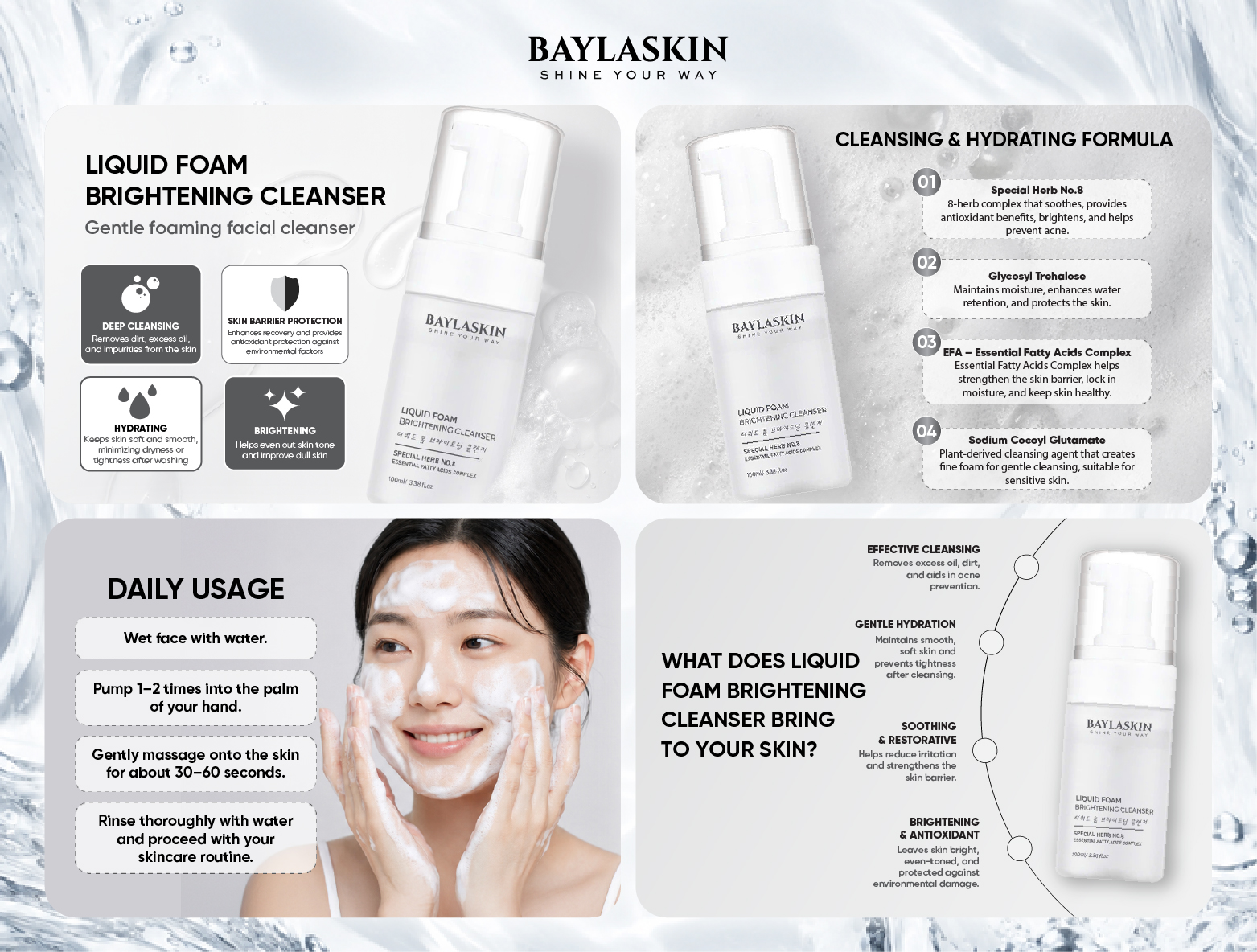
Recommended Solution: Liquid Foam Brightening Cleanser from Baylaskin. Featuring a soft liquid foam texture, this formula cleanses deep within pores while preserving the skin’s natural moisture. Botanical extracts soothe, support brightening, and maintain an ideal pH for oily dehydrated skin.
Step 2: Instant Hydration and Balancing with Facial Mist
A facial mist serves as an excellent prep step, enhancing absorption for subsequent products while providing immediate relief.
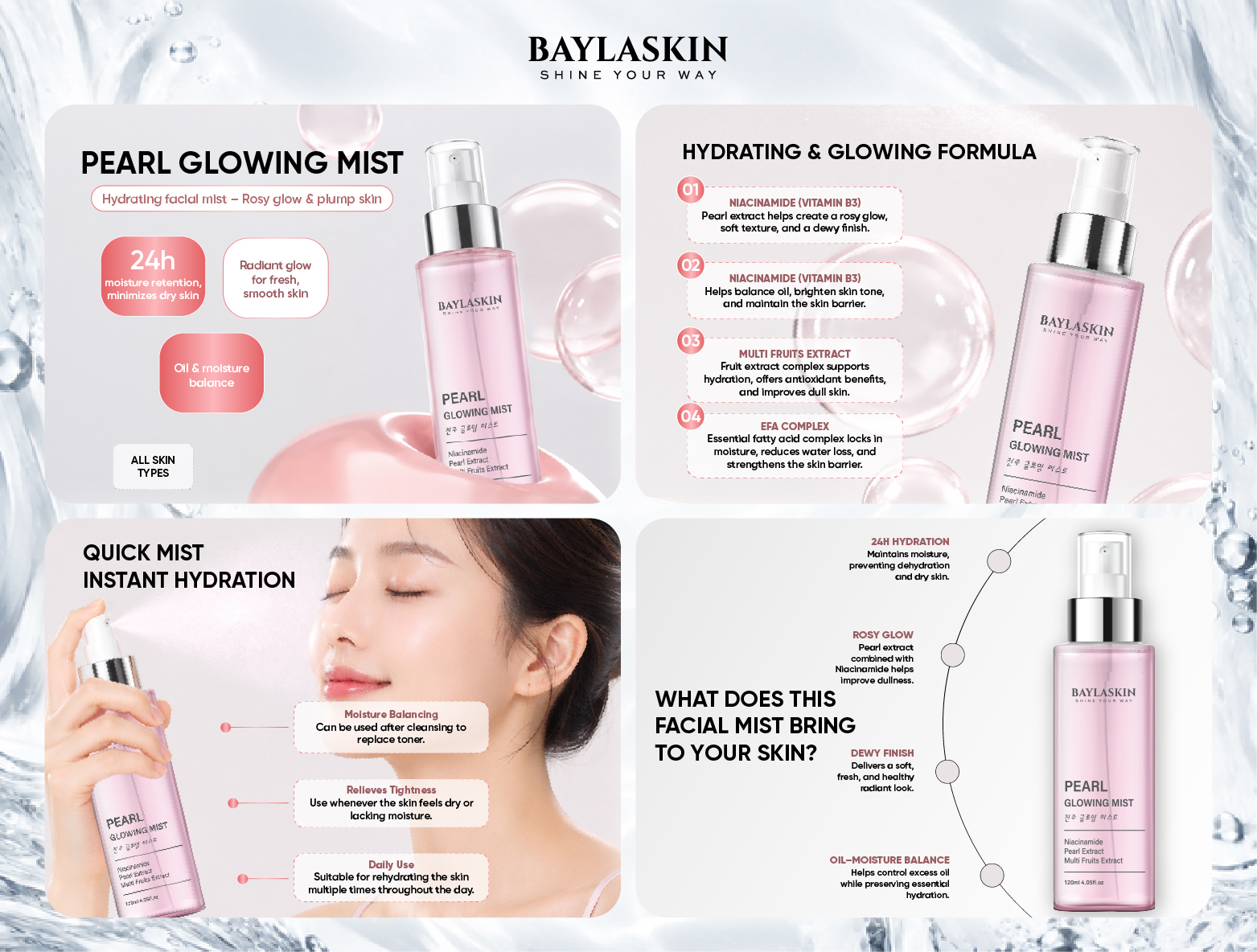
Recommended Solution: Pearl Glowing Mist. Unlike basic water mists that evaporate quickly, Pearl Glowing Mist features a nutrient-rich formula enriched with pearl extract and deep hydrating actives. It releases an ultra-fine mist that instantly calms tight, burning skin, delivering a plump, dewy finish without stickiness.
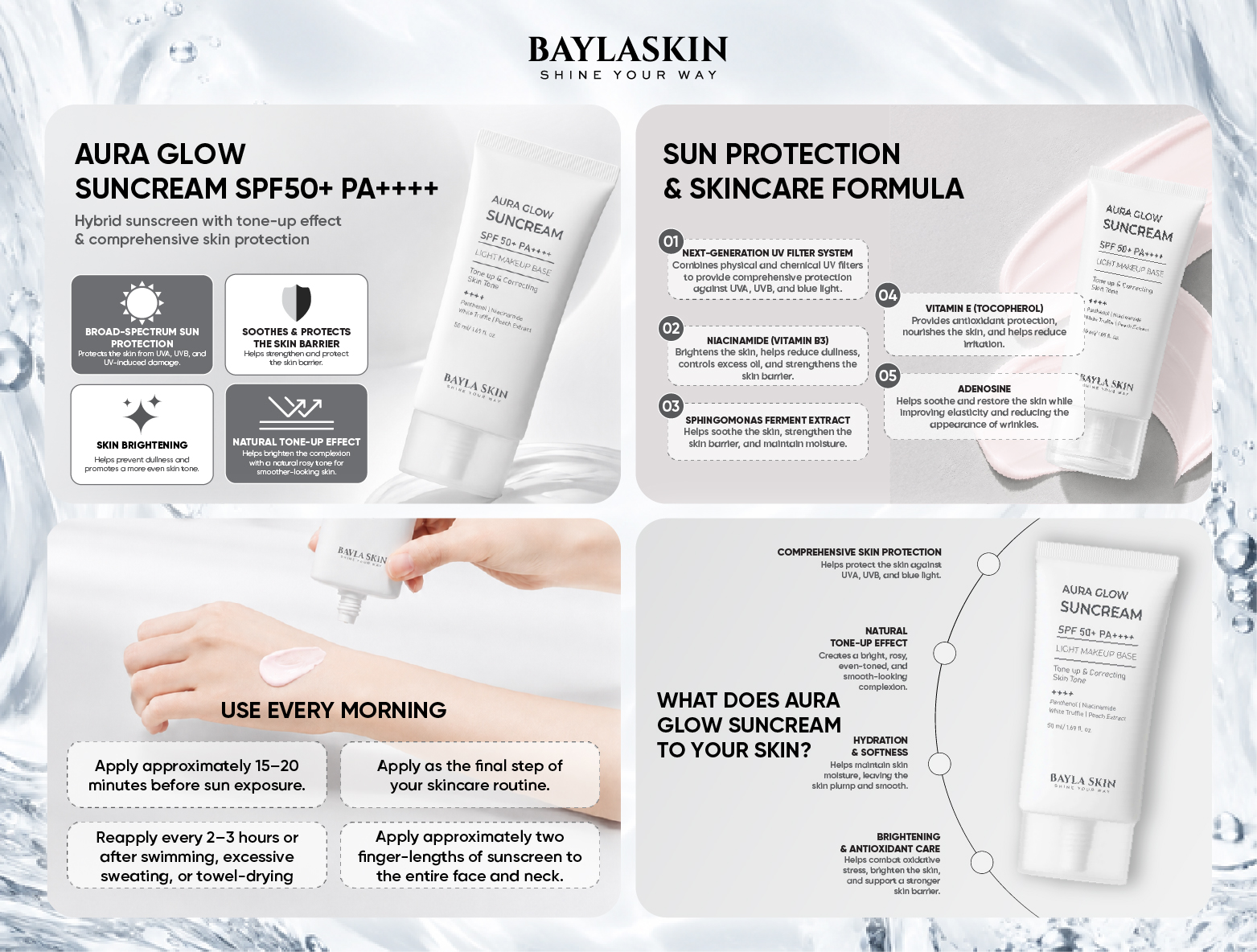
Step 3: Absolute Defense with an Oil-Control, Hydrating Sunscreen
UV radiation depletes natural Hyaluronic Acid in the skin, worsening dehydration. Oily dehydrated skin requires broad-spectrum sun protection with a weightless, non-comedogenic texture.
Recommended Solution: Aura Glow Suncream. An elevated choice for oily skin care. This sunscreen offers high UVA/UVB protection alongside a gentle tone-up effect for a naturally radiant finish. Its lightweight texture absorbs rapidly, controlling excess shine while locking in necessary daytime hydration.
Evening: Double Cleanse, Repair, and Deep Nourishment
Step 1: Makeup Removal and Cleansing (Double Cleansing)
Even without heavy makeup, using a gentle cleanser or micellar water before cleansing with Liquid Foam Brightening Cleanser is mandatory to thoroughly remove sunscreen residue and fine particulate pollutants from pores.
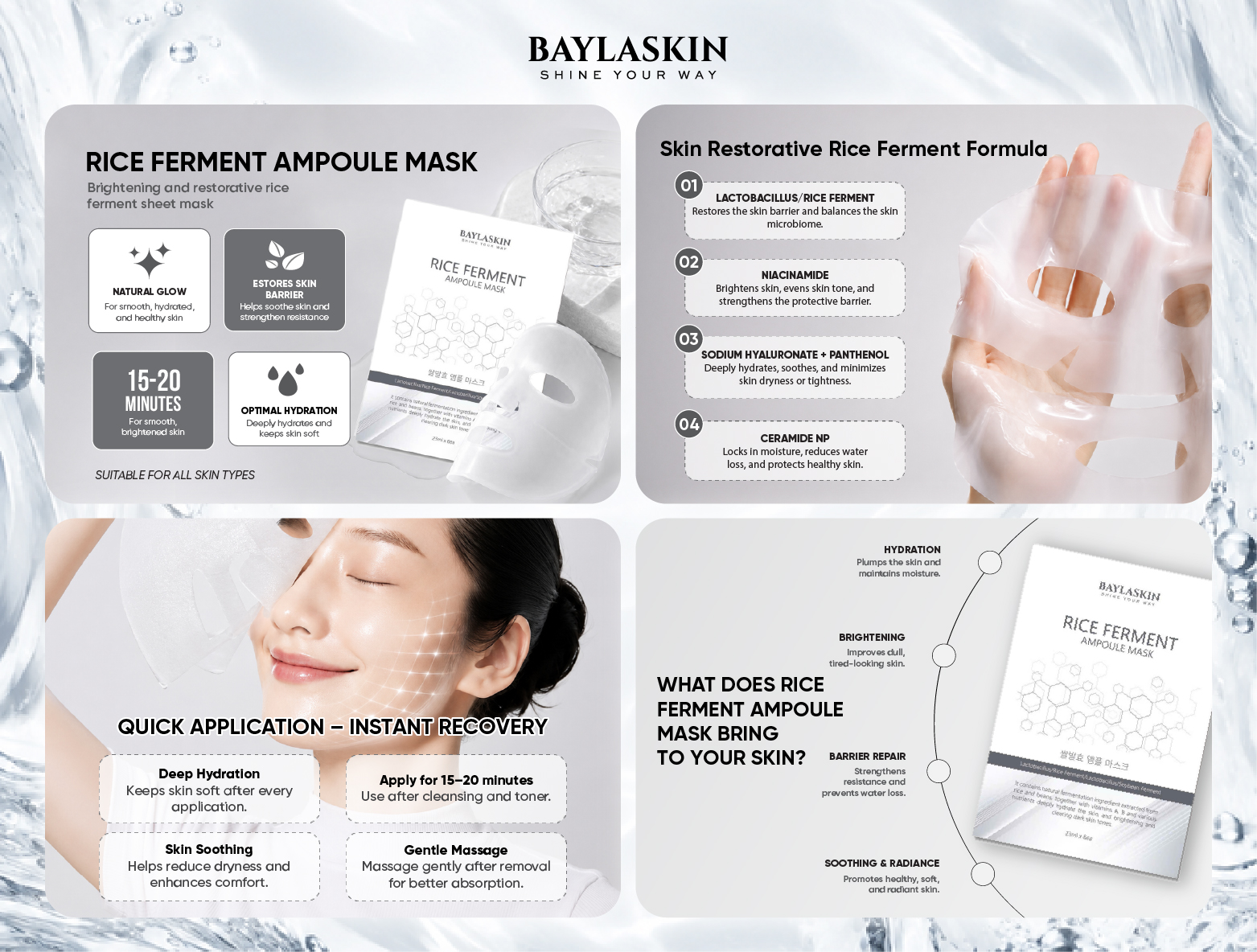
Step 2: Deep Hydration Masking (2–3 Times a Week)
Oily dehydrated skin benefits immensely from periodic nutrient boosts to accelerate skin barrier repair.
Recommended Solution: Rice Ferment Ampoule Mask. Formulated with fermented rice extract rich in B vitamins, amino acids, and minerals, this mask delivers intensive moisture. The concentrated ampoule essence penetrates deep into the epidermis to soothe irritated skin, refine pore appearance, and restore plumping hydration within 15–20 minutes.
Step 3: Deep Moisture and Barrier Repair
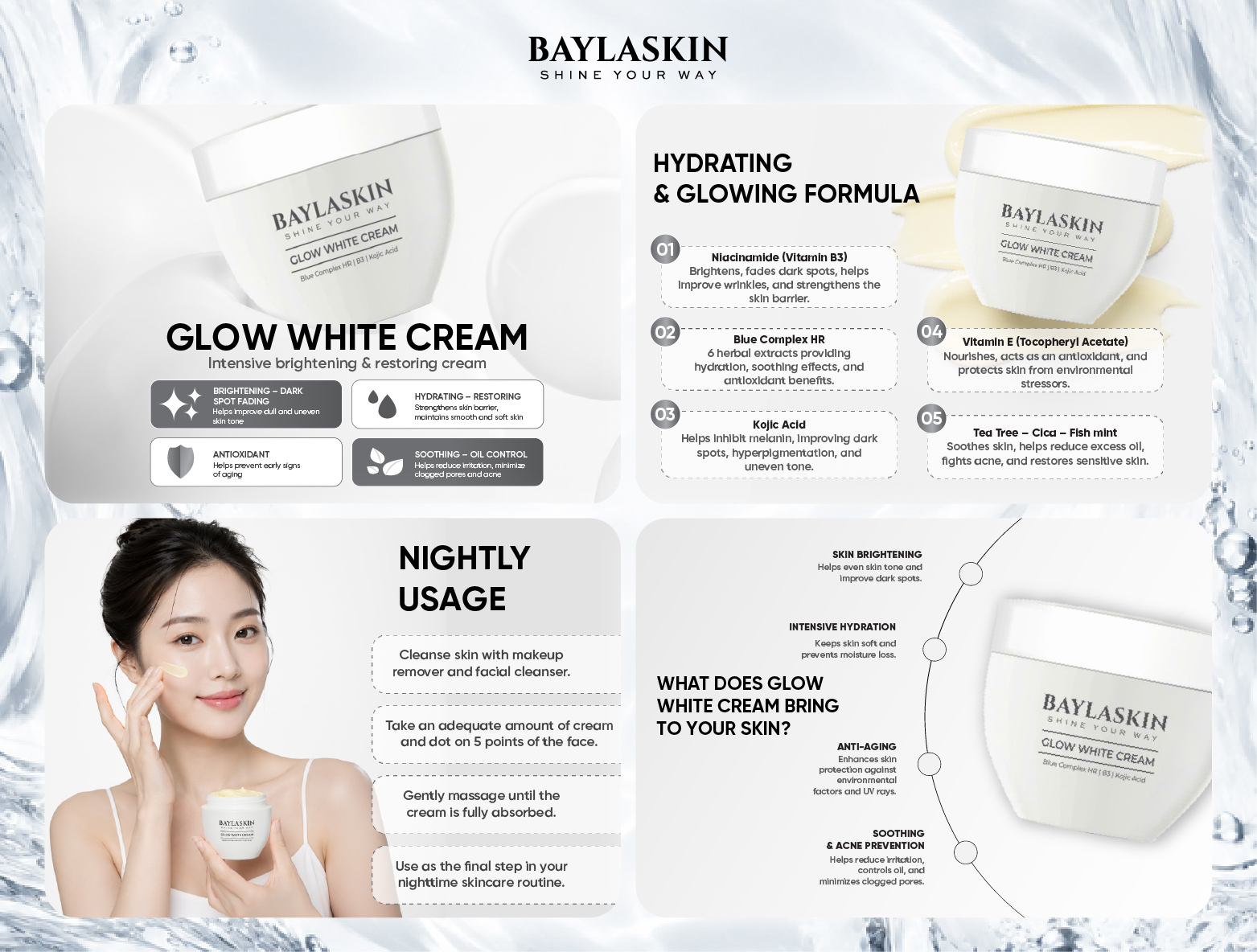
Locking in moisture is the final crucial step in an oily dehydrated skin care routine. Opt for a light, intelligent moisturizer that locks in water without heavy occlusion.
Recommended Solution: Glow White Cream. Featuring an advanced formulation combining safe brightening actives with deeply hydrating ingredients, Glow White Cream reinforces the lipid barrier and prevents Transepidermal Water Loss (TEWL). The smooth cream absorbs quickly, leaving a weightless, non-greasy surface while keeping deeper skin layers nourished.
5. Critical Notes When Caring for Oily Dehydrated Skin
Alongside establishing a proper routine with BaylaSkin products, keep these essential lifestyle and care guidelines in mind:
- Do not wash your face more than 2 times a day: Excessive washing causes sebaceous glands to overcompensate. If oil builds up mid-day, use blotting paper gently or apply a spritz of Pearl Glowing Mist to cool and balance the skin.
- Drink 2–2.5 liters of water daily: External hydration must be supported from within to keep cellular structures plump.
- Avoid products with high drying alcohol and synthetic fragrance: Ingredients such as Alcohol Denat or Ethanol accelerate water evaporation and increase irritation risks.
- Adjust water temperature during cleansing: Never use hot water on the face. Stick to cool or lukewarm water to prevent damaging the skin’s delicate natural lipid film.
Conclusion
Oily dehydrated skin care is not overly complex, but it requires an understanding of skin physiology and consistent care. By listening to your skin’s needs, avoiding harsh over-cleansing, and focusing on hydration and barrier repair, you can restore a smooth, balanced, and healthy complexion.
Explore the complete skincare solutions at Baylaskin to experience a transformation in your skin today!